Soft Molasses Cookies (Chewy Centers, Crackly Tops)

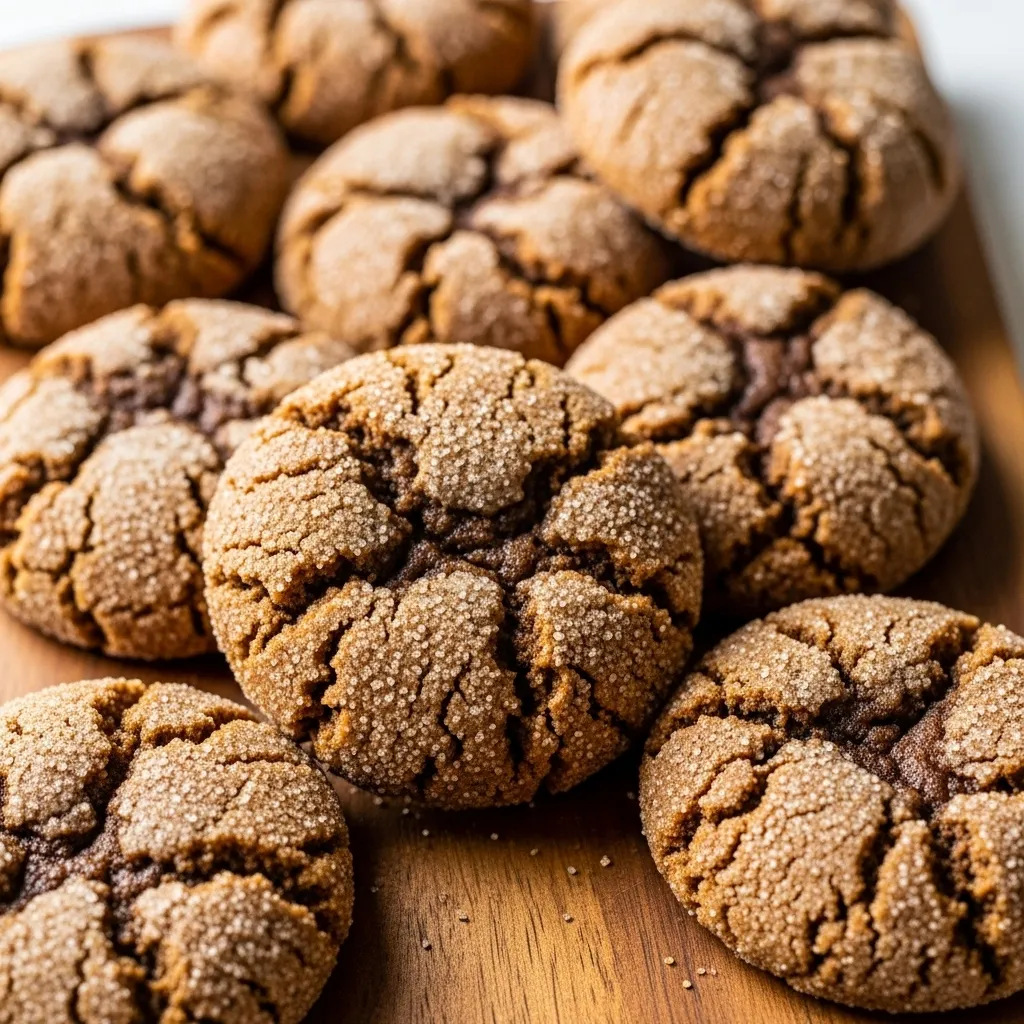
A good molasses cookie should bend a little when you pick it up. Soft middle, crackly sugared top, edges that hold just enough chew.
The smell alone is worth the bake. Cinnamon, ginger, clove, and that dark, almost smoky molasses, all warming up your kitchen at once.
Now I make these whenever a day needs softening. They take about 25 minutes start to finish and the dough doesn’t even need chilling.
Roll them in sugar before baking and they come out with that bakery-style sparkly, crackled top. People will assume you tried very hard. You didn’t.
Why You’ll Love This Recipe
I tested these for that exact soft-and-chewy texture, the one that stays soft for days instead of going hard overnight. Here’s why this version works:
- Soft for days. The molasses and brown sugar keep these tender well past day one. No sad, rock-hard cookies.
- No chilling required. Mix, scoop, roll, bake. You can have warm cookies in under half an hour.
- That crackly sugar top. Rolling the dough in sugar gives you the pretty crinkle and a little sparkle.
- Warm spice in every bite. Cinnamon, ginger, and clove make these taste like a hug.
- Freezer-friendly dough. Scoop and freeze the balls, then bake a couple at a time whenever a craving hits.
What You’ll Need

This makes about 24 cookies.
- 3/4 cup (170g) unsalted butter, softened
- 1 cup (200g) brown sugar, packed
- 1 large egg
- 1/4 cup (60ml) molasses (unsulphured)
- 2 1/4 cups (281g) all-purpose flour
- 2 teaspoons baking soda
- 1 teaspoon ground cinnamon
- 1 teaspoon ground ginger
- 1/2 teaspoon ground cloves
- 1/4 teaspoon salt
- 1/3 cup (65g) granulated sugar, for rolling
One note on molasses. Reach for unsulphured molasses, not blackstrap. Blackstrap is intensely bitter and will overpower the cookies. Regular unsulphured gives you that rich, mellow, classic flavor.
Make sure your butter is properly softened too, not melted. Soft butter creams with the sugar to give the cookies their tender lift.
Pro Tips
The little things that take these from fine to fantastic.
- Cream the butter and sugar well. Beat them for a full 2 to 3 minutes until light and fluffy. This builds the structure that keeps the cookies soft, not flat.
- Don’t overmeasure the flour. Spoon flour into your measuring cup and level it off. Scooping straight from the bag packs in extra flour and gives you dry, cakey cookies.
- Roll generously in sugar. Coat the dough balls fully. The sugar is what creates that signature crackle and sparkle on top.
- Underbake just slightly. Pull them when the edges are set but the centers still look soft and a touch underdone. They finish setting on the hot pan.
- Let them rest on the pan. Give them 5 minutes on the baking sheet before moving them. They’re fragile straight out of the oven and firm up as they cool.
Tools You’ll Need
- Electric mixer (stand or hand)
- Large mixing bowl
- Medium bowl for dry ingredients
- Cookie scoop or two spoons
- Baking sheets
- Parchment paper or silicone mats
- Wire cooling rack
- Measuring cups and spoons
Substitutions and Variations
Make them your own.
- Add fresh ginger heat. A teaspoon of finely grated fresh ginger amps up the spice for ginger lovers.
- Brown butter base. Brown the butter first, then chill it back to soft, for a deeper, nuttier flavor.
- Citrus twist. A teaspoon of orange zest in the dough brightens the warm spices beautifully.
- Coarse sugar finish. Roll in turbinado or sanding sugar instead of granulated for extra crunch and shine.
- Gluten-free. A 1:1 gluten-free baking blend works well thanks to the moisture from the molasses.
- Dairy-free. A good plant butter that’s firm and softenable swaps in fine.
Make Ahead Tips
These fit nicely into a busy schedule.
The dough can be made and refrigerated for up to 3 days. Let it sit out for 10 minutes to soften before scooping.
For grab-and-bake convenience, scoop the dough into balls, roll in sugar, and freeze them on a tray. Once solid, transfer to a bag. Bake straight from frozen, adding a minute or two to the time.
Baked cookies also freeze well, so you can make a double batch and keep some on standby.
How to Make Soft Molasses Cookies
This comes together fast, so get your pans lined before you start.
- Prep. Preheat the oven to 350°F (175°C). Line your baking sheets with parchment.
- Cream the butter and sugar. In a large bowl, beat the softened butter and brown sugar for 2 to 3 minutes until light and fluffy.
- Add egg and molasses. Beat in the egg and molasses until fully combined and smooth.
- Mix the dry ingredients. In a separate bowl, whisk the flour, baking soda, cinnamon, ginger, cloves, and salt.
- Combine. Add the dry mix to the wet and stir just until a soft dough forms. Don’t overmix.
- Scoop and roll. Scoop tablespoon-sized balls of dough and roll each one in the granulated sugar to coat.
- Bake. Place the balls about 2 inches apart on the sheets. Bake for 9 to 11 minutes, until the edges are set and the tops are crackled but the centers still look soft.
- Cool. Let the cookies rest on the pan for 5 minutes, then move them to a wire rack to finish cooling.
A Few Extra Details
A rough nutrition snapshot. These are a comforting treat. Estimate per cookie, based on 24:
| Per cookie (approx.) | Amount |
|---|---|
| Calories | 130 |
| Carbohydrates | 21g |
| Sugars | 12g |
| Fat | 5g |
| Protein | 1g |
Values shift with cookie size and exact ingredients.
Diet-friendly swaps. For gluten-free, a 1:1 baking flour blend works great here because the molasses keeps things moist. For dairy-free, use a firm plant-based butter.
What to serve with them. A cold glass of milk is the forever pairing. For a grown-up version, these are wonderful next to a hot chai latte or a mug of strong coffee.
Time-saver. Use a cookie scoop for evenly sized cookies that bake at the same rate. No guesswork, no half-burnt batch.
The Secret to Staying Soft
The reason these stay tender for days comes down to the ingredients pulling double duty.
Molasses and brown sugar are both hygroscopic, which is a fancy way of saying they grab and hold onto moisture. That trapped moisture is what keeps the centers chewy long after a butter-and-white-sugar cookie would have gone crisp.
Baking soda matters here too. It reacts with the acidic molasses, which helps the cookies spread, rise, and form that crackled top, then settle into a soft, slightly domed center.
So if you want maximum softness, lean into those two things. Pack the brown sugar firmly when you measure, use the full amount of molasses, and pull the cookies a minute early. The carryover heat from the pan finishes them without drying them out.
Leftovers and Storage
Store cooled cookies in an airtight container at room temperature for up to a week. They stay impressively soft the whole time.
A little trick to keep them extra soft: tuck a slice of sandwich bread into the container. The cookies pull moisture from the bread and stay tender.
To freeze baked cookies, layer them between parchment in an airtight container for up to 3 months. Thaw at room temperature, or warm one for a few seconds in the microwave for that fresh-baked feel.
FAQ
Why are my molasses cookies hard? Usually too much flour or overbaking. Spoon and level your flour, and pull the cookies while the centers still look slightly underdone.
What kind of molasses should I use? Regular unsulphured molasses. Avoid blackstrap, which is much more bitter and can take over the flavor.
Do I have to chill the dough? No. This dough bakes well right away, which is part of why these are such a quick treat.
Can I make them bigger? Yes. Use a larger scoop and add 2 to 3 minutes to the bake time. Keep an eye on the centers so they stay soft.
Why didn’t my tops crackle? Either the dough wasn’t rolled in enough sugar, or the cookies were overmixed. A generous sugar coat and a gently mixed dough give you the best crinkle.
Why did my cookies spread into thin puddles? Usually the butter was too warm or melted instead of just softened, or the dough sat in a hot kitchen. Chill the scooped, sugared balls for 15 minutes before baking and they’ll hold a thicker, softer shape.
Can I bake these ahead for the holidays? Yes, and they’re ideal for it. Freeze the sugared dough balls and bake them fresh as needed, or bake the cookies and freeze them. Either way you get that just-made softness on the day you serve.
Wrapping Up
These are the cookies that make a quiet afternoon feel like something.
Soft in the middle, sparkly and crackled on top, and full of that warm spice smell that fills the whole house. They taste like a recipe that’s been loved for generations, and they take almost no effort to pull off.
Bake a batch the next time a day needs a little softening. Then come tell me in the comments how they turned out, if you added fresh ginger or orange zest, and how long they actually lasted in your house. Mine rarely make it to day two. Drop your questions there too, and I’ll help.